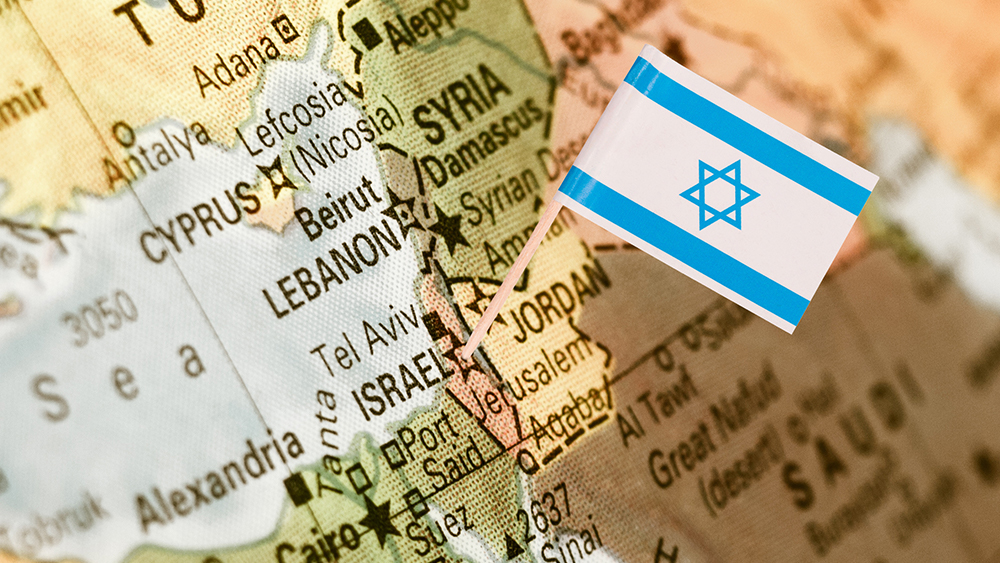
A new world order or a grand illusion? Trump’s “Board of Peace” convenes amid Gaza’s ruins and global skepticism
02/21/2026 / By Ava Grace
- The newly formed “Board of Peace,” chaired by President Donald Trump, held its first meeting to oversee Gaza’s reconstruction, directly linking international aid to the territory’s demilitarization and the creation of a new civilian police force.
- The plan aligns with an Arab League proposal for the Palestinian Authority to replace Hamas in governing Gaza, but faces a major hurdle as Hamas refuses to disarm without the establishment of a Palestinian state.
- The initiative faces significant international skepticism, with key U.S. allies like the U.K., France and Germany refusing to participate, partly due to concerns the board aims to compete with the United Nations.
- A critical flaw noted by observers is the lack of direct Palestinian representation on the board itself, which includes Israel but no Palestinian leadership, leading to accusations of it being a “colonialist operation.”
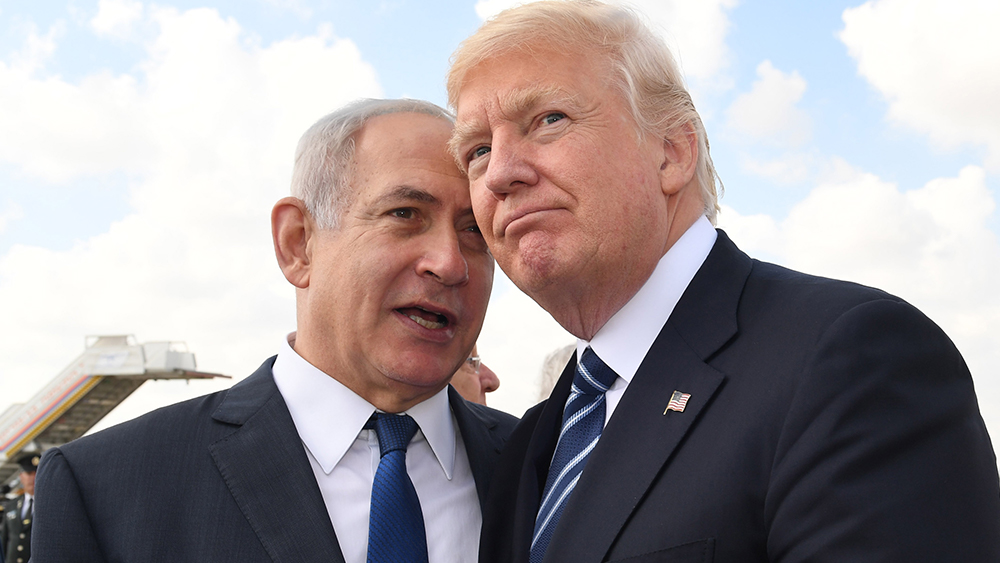
- While Israeli Prime Minister Benjamin Netanyahu joined the board to advance Gaza’s demilitarization, he reiterated his opposition to a Palestinian state and warned that Israel would act alone if Hamas rejects or undermines the plan.
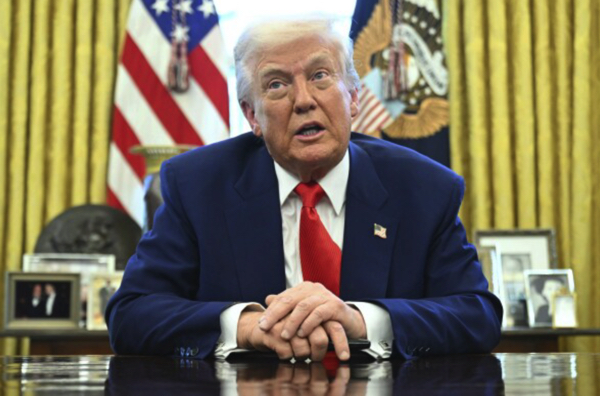
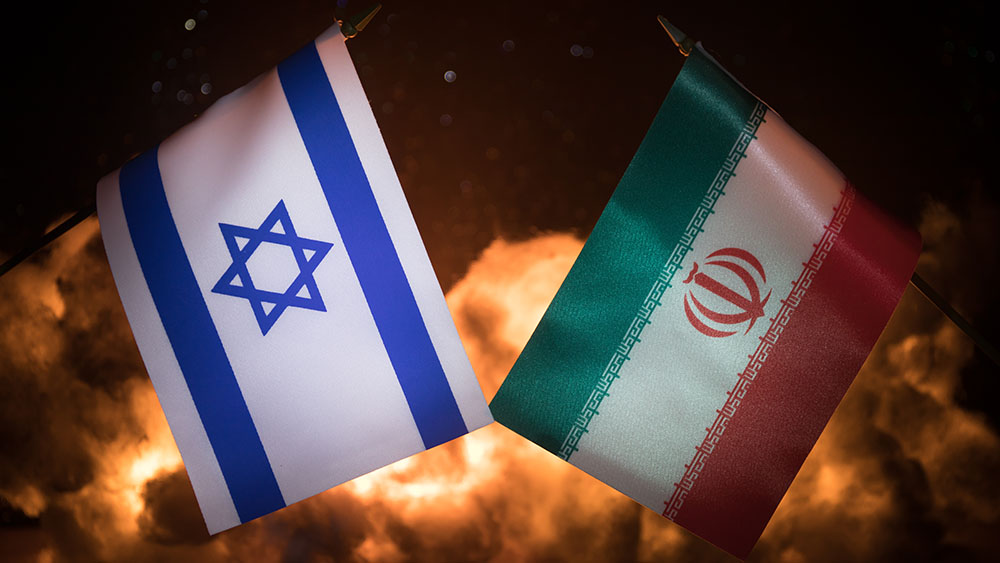
In a high-stakes gamble on the world stage, U.S. President Donald Trump’s newly minted “Board of Peace” convened for its inaugural meeting Thursday, Feb. 19, in Washington, D.C. The gathering represents the first major test of a controversial foreign policy venture aimed at cementing a fragile ceasefire in Gaza. With key U.S. allies absent and the shadow of an unfinished war looming, the board’s launch raises profound questions about the future of Middle East peace.
The immediate task: Rebuilding a shattered Gaza
The immediate focus is the monumental task of rebuilding Gaza. Trump announced the board would oversee reconstruction, directly linking international aid to the territory’s demilitarization. “We don’t want to fund anything having to do with the bloodshed, hatred or terror,” Trump said at the meeting. He elaborated, “Gaza’s reconstruction requires it to be demilitarized and a new, honest civilian police force must be allowed to create safe conditions.” The plan includes shifting aid distribution to the UN and the Red Crescent.
A plan with preconditions and pitfalls
This vision aligns with a broader plan endorsed by the Arab League, which would see the Palestinian Authority assume governance of Gaza from Hamas. While Hamas has vowed to give up political control, it rejects disarmament until the formation of a Palestinian state—a major hurdle for future stability. Trump has stressed, “No one will be forced to leave Gaza.”
The list of absentees from the meeting was telling. Major European powers such as the United Kingdom, France, and Germany declined to participate, as did Canada and the Vatican. These snubs underscore international unease over Trump’s expanded vision for the board, which he has suggested could evolve to resolve conflicts worldwide, raising alarms that it is intended as a direct competitor to the United Nations.
The Palestinian voice: Absent and anguished
A critical flaw highlighted by observers is the lack of meaningful Palestinian representation in the board’s core governance. While a separate, technocratic Palestinian body is intended to handle Gaza’s administration, the high-level Board of Peace includes Israel but no Palestinian leadership. This omission has drawn sharp condemnation, with one senior Catholic leader in Jerusalem labeling it a “colonialist operation.”
Israeli Prime Minister Benjamin Netanyahu formally announced Israel’s membership in the board. Netanyahu remains staunchly opposed to an independent Palestinian state, yet his participation suggests he sees the board as a mechanism to enforce Gaza’s demilitarization under a security framework he can influence. Netanyahu’s warning was clear: “If Hamas rejects your plan, Mr. President, or if they supposedly accept it and then do everything to counter it, then Israel will finish the job by itself.”
A ceasefire on a knife’s edge
All discussions unfold against a backdrop of extreme fragility. While the ceasefire has largely held, it has been marred by periodic Israeli airstrikes and accusations of violations. The humanitarian situation remains catastrophic. The board’s success is entirely contingent upon this shaky calm enduring.
“A ceasefire is a temporary halt in fighting,” said BrightU.AI‘s Enoch. “It is an attempt to establish peace, but it can be fragile and quickly broken. It describes a failed ‘forever’ ceasefire that was violated within a short time.”
The inaugural meeting of Trump’s Board of Peace marks a bold attempt to address an intractable conflict. Its pragmatic focus on Gaza’s reconstruction is a necessary response to an urgent human tragedy. Yet, the initiative is hamstrung by the skepticism of crucial allies and its failure to centrally incorporate the people it purports to help. The board now stands at a crossroads: it can either narrow its focus to the gritty work of implementing a viable peace in Gaza, or it can chase the nebulous dream of supplanting the global order. The former offers a sliver of hope; the latter risks rendering the entire endeavor a geopolitical sideshow.
Watch as Health Ranger Mike Adams discusses Trump’s “Peace Plan” Meets Netanyahu’s War Reality.
This video is from the Health Ranger Report channel on Brighteon.com.
Sources include:
Submit a correction >>
Tagged Under:
Arab League, big government, Board of Peace, Canada, ceasefire, demilitarization, Donald Trump, France, Germany, Hamas, Middle East, Palestinian Authority, United Kingdom, vatican
This article may contain statements that reflect the opinion of the author
RECENT NEWS & ARTICLES